
 Resources & Catalogs

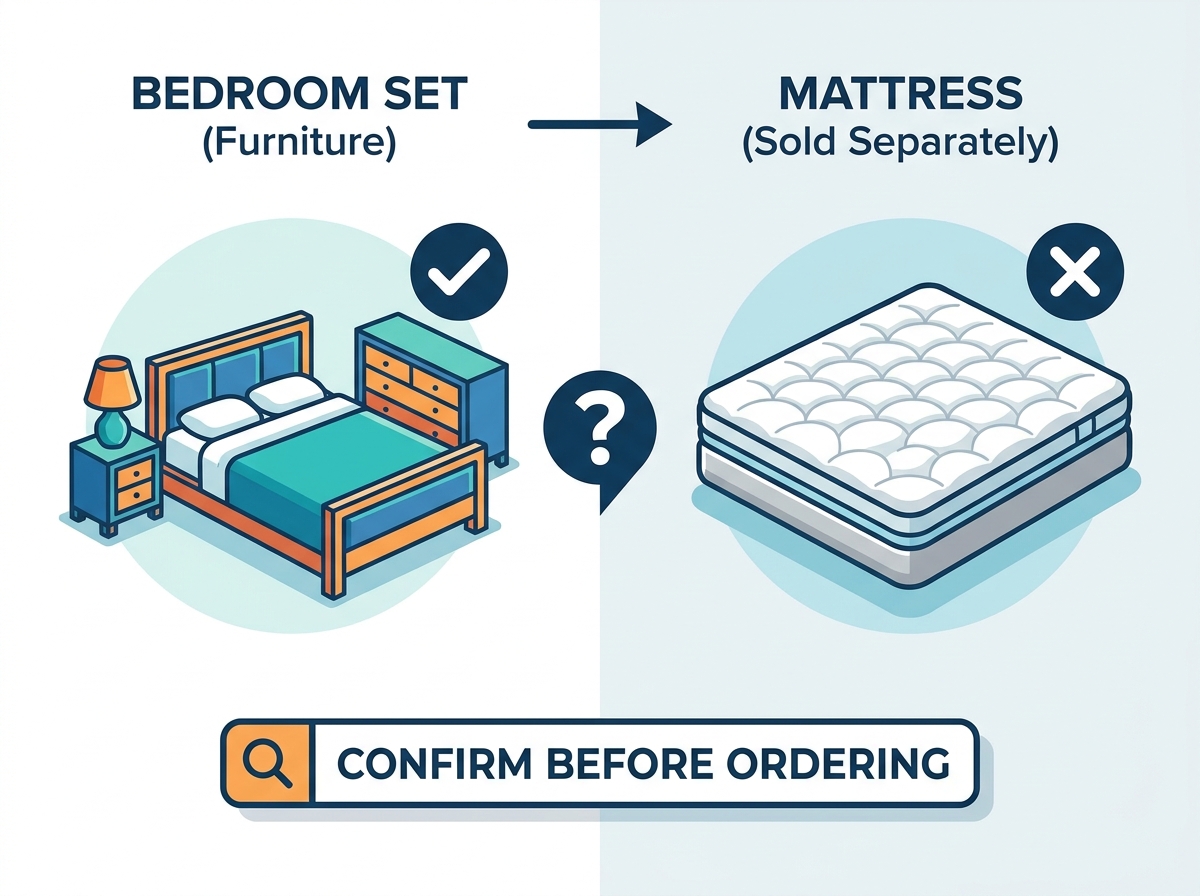
Purchasing furniture often comes with a common point of friction. Buyers assume a beautifully pictured bed setup includes the sleep surface. This misunderstanding frequently leads to unexpected costs and delivery day disappointments. You see a fully styled room in a catalog and assume the listed price covers everything shown. In reality, purchasing a bedroom set requires aligning case goods like dressers and nightstands with structural support systems. The actual mattress remains a completely separate entity.
Mattresses are subject to entirely different manufacturing processes, material standards, and personal preference requirements. Failing to verify exact inclusions before finalizing an order leads to budget overruns and delayed room usability. You might assemble the frame only to realize you cannot sleep on it. This guide establishes a clear framework for decoding furniture retailer terminology. We will explore how to verify itemized inclusions, understand structural requirements, and ensure your new furniture aligns perfectly with your sleep needs.
Industry Standard: The vast majority of standard bedroom sets do not include a mattress; "bed" in furniture terminology refers strictly to the frame, headboard, and footboard.
The Quality Trade-off: When a bedroom set is advertised with a mattress included, the mattress is typically a low-tier, mass-produced model utilized as a loss leader or promotional incentive.
Hidden Exclusions: Beyond the mattress, buyers must also verify if the set requires (and includes) a box spring, foundation, or bunkie board for structural integrity.
Compatibility Risks: Purchasing the set and mattress separately requires strict verification of dimensions, weight capacities, and profile heights to ensure the mattress aligns ergonomically with the included nightstands and headboard.
Navigating furniture showrooms requires a firm grasp of industry terminology. Retailers divide their inventory into specific categories based on manufacturing origins and material types. "Case goods" refer to hard furniture made from wood, metal, or engineered composites. This includes dressers, chests, nightstands, and the structural components of a bed. "Bedding" or "sleep surfaces" refer to mattresses, box springs, and foundations. Retailers separate these categories because they source them from completely different vendors.
When you order a suite of furniture, the pieces are bundled into standard configurations. Understanding these tiers helps clarify exactly what arrives on delivery day. Manufacturers standardize these groupings to streamline shipping and inventory management.
3-Piece Sets: This foundational bundle typically includes the bed frame, one nightstand, and a dresser. It suits smaller rooms or single sleepers.
4-Piece Sets: This configuration takes the base three pieces and adds a mirror designed to mount directly to the dresser or hang above it.
5-Piece Sets: Designed for primary suites, this bundle adds a tall chest of drawers or a second nightstand to balance the room symmetrically.
6-Piece Sets: These expanded bundles often include the bed frame, two nightstands, a dresser, a mirror, and a tall chest or media console.
The word "bed" is the most misunderstood term in furniture sales. When a retailer lists a bed as part of a set, they are referring to the structural frame. The boxes delivered to your home will contain a headboard, a footboard, two side rails, and a series of support slats. The visual staging in showroom photos or online galleries relies heavily on props. Thick mattresses, plush pillows, and layered linens create an aspirational aesthetic. These staging items are never part of the core SKU unless explicitly stated in the itemized manifest.
Deciding between a pre-configured suite and individual modular pieces dictates the entire design process. A bundled suite offers undeniable convenience. The manufacturer has already done the design work. They ensure wood stains, hardware finishes, and architectural lines match perfectly across the room. This cohesive aesthetic appeals to buyers who want a polished, traditional look without spending weeks hunting for complementary pieces.
Evaluating the financial aspect requires looking at bundle discounts. Manufacturers often incentivize bulk purchases. Buying a complete suite usually reduces the per-item cost compared to purchasing a standalone bed frame and sourcing eclectic nightstands and dressers separately. However, this value only holds true if you actually need every piece in the bundle. Paying for a mirror or a chest of drawers you lack the floor space for negates any bundled savings.
Your long-term living situation should influence this decision. Rigid, multi-piece sets demand specific wall lengths and room layouts. If you move frequently, a massive matching suite might not fit into your next floor plan. Buying individual, modular pieces offers superior spatial flexibility. You can mix a heavy wooden bed frame with minimalist metal nightstands. This allows you to adapt your layout to different architectural constraints over time.
First-time buyers often confuse the process of buying a sleep surface with buying actual furniture. This showroom misconception stems from aggressive marketing tactics used by dedicated sleep shops. When you walk into a store that exclusively sells mattresses, their primary goal is to sell you the foam or innerspring unit.
To close the deal, mattress stores frequently run promotions offering a "free bed" with purchase. This free item is almost always a basic, utilitarian metal rail frame. It consists of interlocking steel angle irons sitting on casters or simple glide feet. It serves the purely functional purpose of keeping the box spring off the floor. It offers no aesthetic value, lacks a headboard, and provides zero storage.
Contrast this with a complete bedroom set from a furniture retailer. A true furniture frame features heavy, aesthetic wooden or upholstered components. It anchors the room visually. These substantial frames require their own internal support systems, such as wooden slat rolls or center support legs, to hold the mattress. Expecting a furniture store to throw in a premium mattress just because you bought a wooden frame is the inverse of the mattress store promotion. It simply does not happen in standard retail environments.
The primary reason sleep surfaces remain separate from case goods comes down to the personalization of sleep. Ergonomic requirements vary wildly from person to person. One sleeper requires an ultra-firm traditional innerspring for back support. Another needs a plush, cooling gel memory foam for side-sleeping pressure relief. It is impossible for a furniture manufacturer to standardize a single mattress that satisfies the diverse ergonomic needs of every customer buying a specific style of nightstand.
Manufacturing supply chains further complicate any potential bundling. Furniture factories deal in lumber, veneers, metal hardware, and upholstery fabrics. Mattress factories deal in polyurethane foams, steel coils, and specialized fire-retardant textiles. These facilities are often located on different continents. Consolidating a heavy wooden dresser and a king-size hybrid mattress into a single shipping container is logistically inefficient for premium brands.
Post-purchase support also creates a hard boundary between the two products. Case goods typically carry limited warranties covering manufacturing defects in wood or hardware for a short period. Mattresses carry extended warranties covering specific sag depth and foam degradation over a decade or more. Bundling these items under a single SKU would create an administrative nightmare for warranty claims. This forces retailers to separate the transactions.
Assuming components are included based on a photograph is the fastest route to delivery day frustration. You must analyze the itemized manifest before signing any invoice or clicking the checkout button. Read the "What's Included" tab meticulously. The golden rule of furniture buying applies here. If an item does not have a distinct SKU or line item on the invoice, it is not in the box.
Retailers use specific terminology that can easily mislead uninitiated buyers. Understanding these terms prevents critical missing components.
Marketing Term | What It Actually Means | What Is Missing |
|---|---|---|
Platform Bed | A frame with a solid deck or dense slats designed to support a mattress directly. | Mattress. (Box spring is intentionally not required). |
Panel Bed | A traditional frame with side rails and minimal cross-slats. | Mattress AND Box Spring/Foundation. |
Bed in a Bag | A bundled set of linens, including a comforter, sheets, and pillowcases. | The Mattress, the Bed Frame, and all furniture. |
Complete Bed | The entire structural frame: headboard, footboard, and connecting rails. | The Mattress and the Box Spring. |
The disconnect between showroom presentations and online descriptions requires vigilance. When speaking with sales representatives, ask direct questions. Point to the display and ask if the price on the tag includes the foundation supporting that mattress. When shopping online, scroll past the lifestyle images. Look strictly at the dimension and specification charts to confirm exact deliverables.
While rare in premium retail, "mattress included" bundles do exist in specific market segments. You will typically find these offers targeted at guest rooms, children's furniture, or budget-tier apartment packages. They also surface during aggressive promotional holiday sales. While the convenience is tempting, these bundles carry significant trade-offs.
Assessing the quality of the bundled mattress is critical. Manufacturers must maintain profit margins. This means the included sleep surface is rarely a high-density, premium product. These promotional mattresses often utilize low-density polyurethane foam that degrades quickly. If they use coils, they are usually continuous coil innersprings with low coil counts. They offer minimal motion isolation or edge support.
You must evaluate the cost-to-value ratio. Determine if the bundle is a genuine deal or if the retailer simply inflated the price of the case goods to cover the cost of a subpar mattress. Often, you are paying for the convenience of a single delivery rather than actual product quality. The risk of premature mattress sagging in cheap bundles is high. When the promotional mattress fails within a year, you are forced to buy a replacement anyway. This completely negates the initial cost savings of the bundle.
Buying a suite of furniture and a separate mattress requires precise spatial planning. A beautiful room setup fails instantly if the dimensions clash with your room's architecture or if the mattress does not fit the frame.
Never rely solely on standard mattress sizes when planning your room layout. The footprint of the furniture is always larger. Follow these steps to ensure a proper fit:
Measure the absolute outer dimensions of the bed frame, including the headboard thickness and footboard trim.
Map out the wall clearance needed to fully extend dresser drawers without hitting the bed.
Verify that nightstand placement will not block essential wall outlets or HVAC vents.
Calculate door swings for both the bedroom entry and closet doors to ensure they clear the furniture.
Maintain a minimum of 24 to 30 inches of clear walking space around the perimeter of the bed.
Matching a third-party mattress to a new frame requires checking internal clearances. While sizes are standardized, manufacturing tolerances vary. A mattress might run an inch wider or shorter than the exact specification. Ensure you know the difference between a standard Eastern King and a California King. A standard King is wider and shorter. A California King is narrower and longer. Putting the wrong mattress into a rigid wooden frame will either result in severe crushing of the mattress edges or large, unsightly gaps exposing the slats.
The vertical dimensions of your setup impact both aesthetics and daily comfort. Combining a high-profile frame with a thick mattress alters the entire look of the room.
Mattress Thickness: Modern luxury mattresses easily reach 14 to 16 inches in thickness. If you place a massive pillow-top mattress on a frame with a low-profile headboard, the mattress and pillows will obscure the decorative wood or upholstery you paid for.
Nightstand Alignment: Ergonomics dictate that the top of your sleep surface should sit relatively flush with the top of your nightstands. This usually falls between 24 to 28 inches from the floor. Calculate the combined height of the frame's side rail clearance, the foundation, and the mattress to ensure you aren't reaching drastically up or down for your alarm clock.
Sheet and bedding compatibility is another common pitfall. High-profile mattress and foundation combinations require deep-pocket fitted sheets. Check the pocket depth specifications on your current linens before upgrading to a much thicker sleep surface. Standard sheets will constantly slip off the corners.
Weight capacity limits demand strict attention. Modern hybrid and natural latex mattresses are incredibly heavy. They often exceed 120 pounds for a King size. You must check the static and dynamic weight limits of the included bed frame slats. Factor in the combined weight of the heavy mattress plus the sleepers. Placing a massive hybrid mattress on a frame designed for a lightweight foam pad will cause the slats to bow or break.
Finally, confirm foundation requirements. Read the mattress manufacturer's warranty carefully. Placing a heavy mattress on a frame with insufficient slats will void the mattress warranty. You may need to purchase a separate bunkie board or a low-profile box spring to provide the necessary rigid support.
A bedroom set represents a significant investment in case goods and room aesthetics, not a sleep surface investment. Expecting a premium mattress to be included in the boxes usually leads to delivery day disappointment or poor sleep quality from a promotional add-on. Retailers separate these items because furniture manufacturing and mattress ergonomics serve entirely different purposes.
Approach your purchase with clear shortlisting logic. Select your case goods based on room dimensions, storage capacity needs, and architectural style. Treat the mattress as a completely separate, health-focused purchase tailored to your specific spinal alignment and comfort preferences.
Take the following actions before finalizing your order:
Measure your room to ensure functional clearances for dressers and walking paths.
Confirm the required foundation type for your chosen frame by reading the manufacturer specifications.
Evaluate mattresses that fit the exact internal clearances and weight limits of your new furniture.
Verify the itemized invoice to ensure all necessary support structures are included in the delivery.
A: No. Just like mattresses, box springs or foundations are almost never included in standard furniture purchases. They are considered part of the bedding category. Unless the itemized invoice explicitly states a foundation is part of a promotional bundle, you must purchase the box spring separately to support your mattress.
A: Yes, provided the sizes match exactly. Measure your current mattress and cross-reference it with the internal dimensions of the new frame. Additionally, check the new frame's foundation requirements. If you are moving from a box spring setup to a platform bed, your current mattress will work, but the overall height will change.
A: A standard 4-piece configuration includes the core structural bed frame (headboard, footboard, and rails), one nightstand, a multi-drawer dresser, and a matching mirror designed to attach to the dresser. It does not include the mattress, foundation, or bedding.
A: Retailers use mattresses and bedding as visual merchandising props. Staging the frame with a mattress shows the scale of the furniture and helps buyers visualize the final look in their own homes. It also serves as a cross-selling strategy, encouraging buyers to visit the store's separate bedding department.
A: Rarely. The mattresses included in these promotional bundles are typically low-quality, mass-produced units utilizing cheap foam or basic coil systems. While convenient for a rarely used guest room, they lack the durability and ergonomic support required for nightly use, often requiring early replacement.


