
 Resources & Catalogs
You finally find a nightstand boasting the perfect design and finish for your bedroom. Then you realize it sits a few inches below your mattress line, sparking immediate hesitation. Will this height gap ruin your bedroom aesthetic or make reaching for your phone terribly awkward?
Traditional interior design rules firmly dictate perfectly flush surfaces across your sleep space. However, modern bedroom layouts frequently break these rigid guidelines. Platform setups and minimalist styling completely shift our expectations around practical ergonomics. We no longer strictly adhere to outdated rules from decades ago.
We can confidently shift away from design anxiety by adopting a practical decision-making framework. You will learn to evaluate your current furniture shortlists based on actual daily use. We will explore how aesthetics, reachability, and scale interact deeply. You can then finalize your purchase without regret, knowing exactly how your furniture pieces will function together.
The baseline rule: A bedside table can safely sit 2 to 3 inches lower than the mattress top without compromising primary ergonomics.
The ergonomic risk: Dropping more than 3 inches below the mattress increases the risk of knocking items over or straining to reach essentials in the dark.
Proportion matters: Visual weight can compensate for a lack of height; styling a lower table with a taller lamp restores bedroom symmetry.
Measurement protocol: Always measure from the floor to the top of the mattress—not just the bed frame—before finalizing a purchase.
Standard design guidance dictates an ideal functional scenario. Your bedside table should ideally rest perfectly level against the top edge of your mattress. However, strict adherence is rarely necessary in modern homes. Interior designers universally agree a variance of 2 to 3 inches lower remains functionally acceptable.
Dropping the height slightly often works brilliantly in specific design contexts. Minimalist aesthetics actively embrace lower furniture to create a sense of grounded calm. Platform beds naturally sit much closer to the floor. Rooms featuring low ceilings benefit greatly from maintaining a lower visual horizon. This intentional design choice makes the entire room feel much taller and more spacious.
You must, however, consider the functional trade-off. Reaching down from a prone sleeping position feels physically more awkward than reaching across a flat plane. Reaching slightly upward is also generally easier on the shoulders. You must highlight the reality of your daily habits. Think about fumbling for a phone charger in complete darkness. Consider the increased risk of knocking over a full water glass when your hand drops unexpectedly over the edge of the mattress.
Ergonomics experts note human joints prefer horizontal movements when we lie down. A sharp downward reach requires you to roll your shoulder and twist your spine. You can mitigate this by keeping critical items near the edge of the table. Less urgent items can sit further back. Always evaluate your personal mobility and nightly habits before embracing a dramatically lower surface.
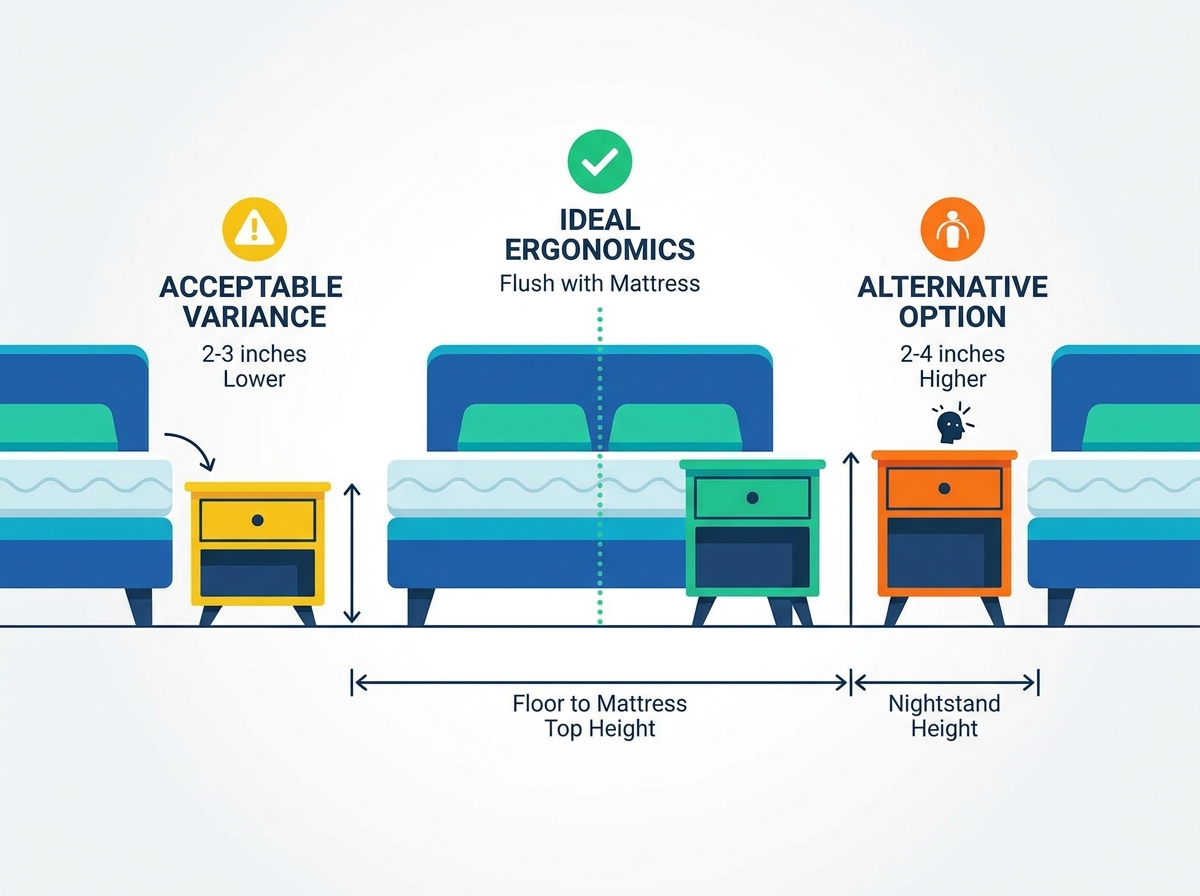
We must evaluate how different height alignments impact both form and function. Every height scenario carries specific advantages and distinct drawbacks. Your choice fundamentally alters how your bedroom operates daily.
Scenario | Design Impact | Functional Experience |
|---|---|---|
The Lower Table | Creates an open, airy aesthetic. Prevents blocking natural light from low windows. | Prone to spills. Can cause shoulder strain if reaching far down frequently. |
The Level Table | Delivers a built-in, custom look. Maximum visual symmetry. | Safest for cups and electronics. Perfect ergonomic horizontal reach. |
The Taller Table | Frames the bed powerfully. Adds vertical visual interest. | Easy to reach items. Sharp corners become a significant head-bumping hazard. |
Scenario A: The Lower Table (2+ inches below mattress)
Going intentionally low creates an unobstructed, open feel. It prevents bulky furniture from dominating the space. This approach perfectly suits low-profile furniture styles. It also avoids blocking natural light from nearby windows. However, a table sitting too low can look disproportionate next to thick pillow-top mattresses. The stark contrast creates an unbalanced visual dynamic. Ergonomic strain also becomes a real issue when reaching down repeatedly from the bed.
Scenario B: The Level Table (Flush with mattress)
Designers consider this the ergonomic ideal. It creates a seamless, built-in look across the wall. It remains the absolute safest configuration for placing and retrieving delicate items in the dark. Unfortunately, maintaining this perfect alignment is notoriously difficult. Variations in mattress thickness over time will disrupt the parity. Mattress sagging also slowly alters the resting height. Finding an exact match often feels like an impossible task without custom-built cabinetry.
Scenario C: The Taller Table (2–4 inches above mattress)
A taller profile provides excellent framing. It establishes the bed as the definitive focal point of the room. You will find it much easier to reach items without rolling over completely. The upward angle allows the arm to pivot naturally. Conversely, tall nightstands can quickly create a claustrophobic feel in small spaces. Sharp top corners transform into a dangerous head-bump hazard, especially for restless sleepers.
Many buyers make a critical error during the measurement phase. They measure the nightstand against the frame alone. Total bed height actually combines several different elements. You must calculate the bed frame height, the box spring if applicable, and the actual mattress thickness. This combined measurement serves as your true functional baseline.
We see significant variances between traditional and modern furniture setups. You must match your nightstand category to your specific bed architecture.
Traditional Setups: Standard bed frames featuring a box spring and thick mattress sit quite high. They typically require nightstands falling in the 24 to 28-inch height range. Anything shorter looks comical next to a massive traditional bed.
Modern Platform Beds: These streamlined frames eliminate the box spring entirely. They drastically lower the required surface height. For these contemporary setups, 18 to 22-inch tables remain highly appropriate and visually balanced.
Transitional Frames: Mid-century modern frames often sit somewhere in between. They require careful measurement, usually demanding a height around 22 to 24 inches.
You should also focus on future-proofing your purchase. Mattresses represent a significant variable. Consider if you plan to upgrade to a thicker luxury mattress soon. Will you add a thick memory foam topper next winter? Adding a three-inch topper effectively makes your current table feel three inches lower overnight. Always factor in potential bedding upgrades before finalizing your furniture selections. If you anticipate a thicker mattress, choosing a slightly taller table today prevents ergonomic headaches tomorrow.
Height is only one component of the dimensional puzzle. You must balance the height deficit with proper width and robust scale. We introduce the standard scale rule here. A nightstand should measure roughly one-quarter to one-third the width of your bed. This specific ratio maintains critical visual harmony, especially if the table lacks vertical presence.
Evaluating your storage capacity remains crucial. Lower profiles naturally impact the internal storage volume. Standard 2 drawer bedside table dimensions often measure 18 to 22 inches tall and 20 inches wide. These specific dimensions naturally sit lower to the ground. However, they provide necessary daily utility without towering awkwardly over a low platform bed. The double-drawer layout maximizes horizontal space when vertical space is restricted.
Visual weight plays a fascinating psychological role in room design. We can trick the eye using proportions. A bulky, wide, but low table looks highly intentional. It grounds the space and commands authority. It feels like a deliberate design choice. Conversely, a narrow, low, and spindly table looks like a glaring sizing mistake. Thin legs on a short table make the piece look cheap and insubstantial. If you must go lower than the mattress, always opt for a wider, heavier-looking piece. Solid bases or blocky drawer structures compensate beautifully for missing height.
Keep the surrounding room size in mind. Massive wide nightstands in a tiny room will restrict walking paths. You must leave at least two to three inches of clearance between the mattress edge and the table. This vital gap accommodates heavy winter comforters. It prevents bedding from bunching up unpleasantly against the furniture. It also saves your knuckles from painful scrapes when making the bed each morning.
Perhaps you already purchased a low table, or you inherited a beautiful antique piece. You can easily bridge the visual gap using clever styling techniques. Professional stylists use these exact methods to correct scale issues.
Lighting adjustments: Use a taller, heavier table lamp. A substantial lamp draws the eye upward immediately. It effectively bridges the empty visual gap existing between the low table surface and the top of the headboard.
Wall-mounted solutions: Install plug-in or hardwired wall sconces directly above the low table. This strategy frees up the limited surface area entirely. It establishes a strong vertical scale, drawing attention away from the low tabletop.
Strategic staging: Stack heavy, beautiful coffee table books on the surface. This artificially raises the functional resting height for critical items. You can safely place a water glass or a digital clock on top of the book stack.
Artistic leaning: Lean a tall, framed mirror or a piece of heavy artwork against the wall behind the table. This creates a vertical backdrop. It visually anchors the small table to the larger room geometry.
Next-step action: Map out the exact dimensions of your shortlisted tables before buying. Use blue painter's tape on the wall next to your bed. Lie down and reach toward the tape. Verify the reach and visual impact in real-time before clicking order.
You can also utilize decorative trays. A tray featuring tall edges creates a defined boundary. It prevents small items from rolling off the lowered surface. This simple addition adds a layer of safety and polished elegance.
A nightstand sitting slightly lower than your bed remains entirely acceptable. You simply need to account for the minor ergonomic shift. Modern design embraces this relaxed aesthetic, particularly alongside platform beds and minimalist interiors. A variance of up to three inches rarely causes daily frustration.
We encourage buyers to prioritize furniture that beautifully balances storage needs and width ratios. If you cannot perfectly match your mattress height, widen the table to compensate visually. Focus on heavy, grounded designs rather than spindly, delicate legs.
Take action today by grabbing your tape measure. Measure your exact mattress-to-floor height right now. Account for your current mattress toppers. Then, confidently browse our categorized collection of low-profile and standard nightstands to find your perfect functional match.
A: The traditional standard height falls between 24 and 28 inches. This measurement historically aligns with standard bed frames utilizing a traditional box spring and thick mattress. However, this standard shifts depending entirely on your specific bed setup. Platform beds often require much shorter tables ranging from 18 to 22 inches.
A: Symmetrical designs are not strictly required. You can mix and match different table styles for an eclectic look. However, their overall heights should closely match each other to maintain visual balance across the room. Disparate heights create an unsettling, lopsided aesthetic that disrupts the bedroom's calming atmosphere.
A: We highly recommend leaving 2 to 3 inches of clearance between the mattress and the table edge. This vital gap provides adequate space for thick bedding and heavy comforters to drape naturally. It also effectively prevents scraped knuckles when you tuck in sheets during your morning bed-making routine.


